
What, you ask, is a fractal?
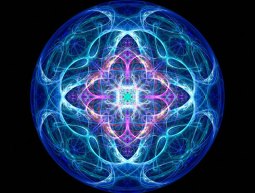
“A fractal is a never-ending pattern. Fractals are infinitely complex patterns that are self-similar across different scales. They are created by repeating a simple process over and over in an ongoing feedback loop.” (Fractal Foundation) 
Fractals exist in nature (trees, plants, coastlines, mountains, sea shells, hurricanes) and in human relationships.
For example, hospitals focus on reducing small mistakes to reduce the large ones. They have learned that the same repeated patterns that cause minor errors are responsible for costly ones.This is a fractal.
In 1989, Stephen Covey wrote a groundbreaking book about highly effective people. He found that the secret to success lies not in intelligence or personal charisma, but in having effective habits; simple patterns repeated again and again. This is a fractal.
In organizations, fractals abound. Patterns of integrity or corruption, transparency or secrecy are repeated at different levels, creating what we call organizational culture. This is a fractal.
Internal cultural patterns are also repeated externally. Employees who are treated with respect and appreciation will provide the same to customers and clients. Employees who are treated poorly will provide poor customer service. This is a fractal.
We all create and reinforce fractals by repeating patterns. Employees at all levels can change organizational culture by refusing to repeat patterns that create dysfunction, and creating new patterns that bring life. The great thing about fractals is they can transform systems from the bottom up, and from the middle out. They are not reliant on authority or positional power for their energy, but thrive on the energy of everyone who participates.
 Denise Moreland’s book, Management Culture, can be purchased at mgmtculture.com or Amazon. (Please consider writing a review on Amazon.) Sign up for Denise’s newsletter and follow her on Twitter and Facebook.

 Denise Moreland