
When there are too many people coming to dinner than there are seats at the table, what do you do? You create the kid’s table.
The 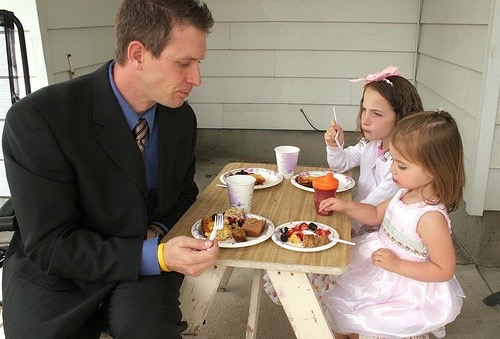 kid’s table is often a card table, with a plastic tablecloth, mismatched dishes and folding chairs. Because the table is too small for serving dishes, food is passed from the big table. Toward the end of the meal, someone notices that at least one dish never got passed to the kid’s table, which sends groans from the kid’s table, and laughter from the grown-up table.
If you were raised in a “kid’s table” family, you know the hopeful anticipation when you believe you are finally old enough to move up. You may know the pride that comes with this right of passage, or the humiliation of being told no because the grown-up table is still too crowded.
At work, do you ever feel like you are sitting at the kid’s table with folding chairs and mismatched glasses, getting dishes that have been passed to the important people first, and wondering if you are getting the whole meal? Do you ever have the sense that your table could be folded up and stored back in the closet at any time, and you’d have no place to sit, just as dessert is being served?
Executives and managers who sit at the grown-up table would be wise to learn a lesson from my Mom. She was opposed to the notion of a “kid’s table.” Instead, she and Dad rearranged their living room, extending the dining room table with as many other tables as she needed to ensure that everyone sat together and got to participate in the conversation. She and Dad made it a point to sit at the card table end to prove that it was just as valued as the other end of the table.
At Mom and Dad’s house, no matter how big the gathering, no one was diminished. All were welcomed as equals. Now, please pass the mashed potatoes!
For more radical ideas on how to open the table at work, see my book, Management Culture at mgmtculture.com or on amazon.com.

 Denise Moreland
I grew up with the “kids table” at all family holiday festivities. And, indeed, it was a big step to be included at the big folk’s table. One indelible memory is that it taught us that different rules and standards applied depending on where we were placed. We were also less accountable at the kids table. It is frustrating to often be in situations in which it is obvious that a double standard applies, especially if you are not certain which one it will be today. Usually the “standard of the day” is chosen by the one with the most power/seniority in the respective culture. Could this be one of the root causes of a dysfunctional team, group, organization?
This is definitely a root cause of dysfunction in groups! When some are excluded or disrespected, while others are listened to, it creates competition and frustration, which undermines teamwork and creativity. It robs everyone of full participation and reduces the quality of the work. Thanks for your comments, Grant.